


How to Choose the Best Home Tool Kit for Everyday Repairs
The best home tool kit is not always the one with the highest piece count. Learn which tools matter, when you need a cordless drill, and how to choose a kit for real household projects.

23 July 2026
The best home tool kit should cover the repairs you are actually likely to face—not simply offer the largest number of pieces. For most homeowners and renters, that means having reliable screwdrivers, pliers, a hammer, tape measure, utility knife, level, wrenches, sockets, bits, and common fasteners in an organized case. A cordless drill becomes especially useful for furniture assembly, shelves, curtain rods, and repeated screwdriving. Before buying, consider your normal projects, available storage space, experience level, and whether the kit is meant for occasional repairs or frequent DIY work.
Who Needs a Home Tool Kit?
A general household tool kit is useful for:
- New homeowners preparing for routine maintenance
- Renters assembling furniture or fixing loose hardware
- Students moving into a first apartment
- Families that want one organized repair set
- DIY beginners building their first tool collection
- Gift buyers looking for something practical
A basic kit can handle jobs such as tightening cabinet handles, assembling a desk, hanging pictures, measuring furniture, replacing simple hardware, and opening packaging.
It is not a replacement for specialized electrical, plumbing, automotive, or construction equipment. If a project involves hidden wiring, gas, structural damage, or serious water problems, the safest tool may be a qualified professional.
Focus on Useful Tools, Not Just Piece Count
A 300-piece set is not automatically better than a 100-piece set. Manufacturers may count every fastener, screwdriver bit, drill bit, and small accessory as a separate piece.
Those accessories can still be useful, but they should not distract from the core tools. Before ordering, check whether the kit includes:
- Phillips and flathead screwdrivers
- Needle-nose and general-purpose pliers
- An adjustable wrench
- A claw hammer
- A tape measure and level
- A utility knife
- Metric and SAE hex keys
- Common sockets and screwdriver bits
A useful home kit should also provide at least two tools capable of holding and turning a nut-and-bolt connection. This often comes up when assembling furniture, adjusting a bike, or tightening household hardware.
Do You Need a Cordless Drill?
You can tighten a few screws manually, but a cordless drill saves time when assembling large furniture, installing brackets, or completing projects with many fasteners.
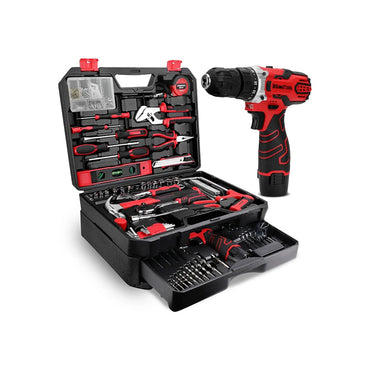
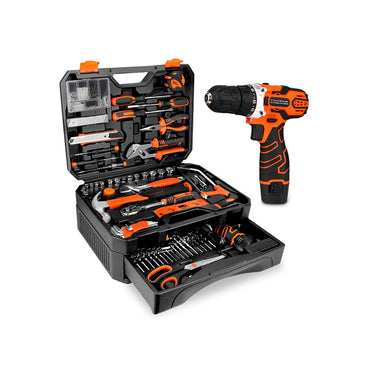
For everyday household drilling and screwdriving, the KingTool 255 PCS Home Tool Kit with 12V Drill combines a cordless drill with common hand tools, bits, sockets, and repair accessories. It is a practical choice for furniture assembly, shelf installation, apartment setup, and light weekend projects.
The KingTool 276 PCS Home Tool Kit with 12V Cordless Drill adds a three-layer storage case. Its drill features two-speed control, a 3/8-inch keyless chuck, and a 1.5Ah lithium-ion battery, making it better suited to regular household work than demanding professional construction.
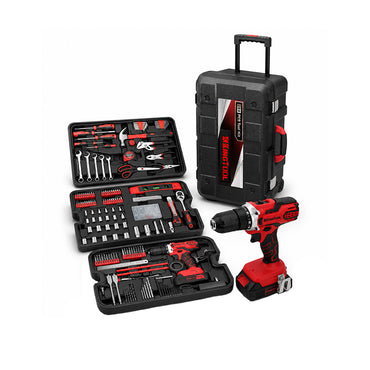
For larger projects, the 286 PCS Rolling Tool Kit with 21V Drill offers a more powerful drill and rolling storage case. It is intended for broader home, garage, woodworking, and basic automotive tasks.
What if You Already Own a Drill?
Not everyone needs to pay for another power tool.
Homeowners who already have a cordless drill may get more value from a hand-tool-focused set. The KingTool 325 PCS Home Tool Kit includes common household essentials such as screwdrivers, pliers, sockets, a hammer, tape measure, utility knife, hand saw, bits, fasteners, and accessories in an organized carrying case.
It is a better match for loose hardware, furniture maintenance, bike adjustments, garage tasks, measuring, cutting, and other quick repairs that do not require another drill.
For a slightly larger organized option, the 328 PCS Home Tool Kit with Drawer Storage combines hand tools, sockets, cutting tools, measuring tools, fasteners, and repair accessories in a compact three-layer case.
Choose the Kit Around Your Projects
Think about the last five repairs you completed—or wished you could complete.
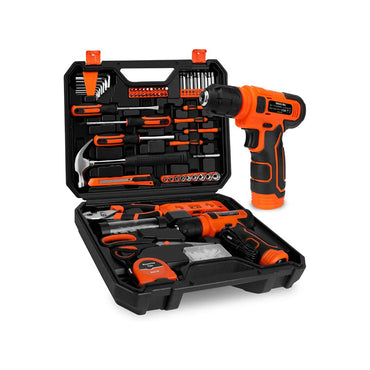
For a first apartment, a compact kit with an 8V drill may be enough for furniture, loose screws, and small fixtures. The 139 PCS Home Tool Kit with 8V Drill is designed as a smaller starter option.
For frequent home DIY, a 12V drill kit offers a useful balance of portability and capability. For larger garage or woodworking projects, a 21V drill and rolling case may make more sense.
Specialized car repairs, bike maintenance, gardening, and electrical work require tools that may not appear in a general household kit. Browse the complete KingTool tool kit collection to compare storage styles, drill options, and tool selections.

Storage Matters More Than It Seems
A tool is not very useful when you cannot find it.
Molded cases keep each item in a defined position and make missing tools easy to notice. They also protect sockets, bits, and drill accessories from mixing together.
Soft bags provide more room for adding tools later, but small accessories may become harder to organize. Drawer-style and rolling cases are useful for larger sets, while compact cases fit more easily in apartments, closets, cabinets, and utility rooms.
Choose storage based on where the kit will live—not only how it looks in the product image.
Basic Tool Safety
Inspect tools before use and do not use damaged handles, loose hammer heads, cracked blades, or worn electrical components. Keep the workpiece stable, select the correct bit or socket, and wear suitable eye protection when drilling, cutting, or creating debris.
OSHA notes that hand and power tools can cause serious injuries when they are used or maintained improperly. Its hand and power tool safety guidance explains common hazards and basic precautions.
For cordless kits, read the drill manual and use the correct charger. The CPSC home power-tool checklist recommends reading the manufacturer’s directions before operating power tools.
Used lithium-ion batteries should be taken to appropriate collection or recycling locations rather than placed in household garbage or curbside recycling. See the EPA battery disposal guidance.
Frequently Asked Questions
What tools should every basic home kit include?
Start with a hammer, tape measure, screwdrivers, pliers, adjustable wrench, utility knife, level, hex keys, sockets, bits, and common fasteners.
Is a larger tool kit always better?
No. A large piece count may include many small bits and fasteners. Focus on core tools, project compatibility, storage, and whether the set includes items you will actually use.
Is a 12V drill enough for home repairs?
A 12V drill is suitable for furniture assembly, screwdriving, pilot holes, shelves, brackets, and many light household projects. It is not designed to replace heavy-duty construction equipment.
Should beginners buy individual tools or a complete kit?
A complete kit is convenient when you own almost nothing. As you use tools more frequently, you can replace the most-used items with higher-quality individual tools.
Which tool kit is best for a new homeowner?
Choose a drill-based kit if you expect to assemble furniture or install fixtures. Choose a hand-tool kit if you already own a drill and mainly need tools for tightening, measuring, cutting, and maintenance.
Final Verdict
The best home tool kit is the one that matches your real repair habits.
Choose a compact starter set for occasional apartment fixes, a 12V drill kit for regular household projects, or a larger hand-tool set when you already own power tools. Pay attention to core tools, storage, drill capability, and intended use rather than choosing by piece count alone.
Explore the full range of KingTool home tool kits to find an organized setup for everyday repairs, first homes, garages, and weekend DIY projects.
Prev post

How to Use a Cordless Drill for Furniture Assembly: 7 Beginner Tips
Updated on 27 July 2026
Next post

Utility Knife vs. Box Cutter: 6 Cutting Tools Explained
Updated on 22 July 2026